February 2024—This is a select little series of stories about mixologists, bartenders, servers, their patrons, and inviting spaces about enjoying a beverage (alcoholic and non) in the Triangle.
My friend,(We’ll call her R to keep the mystery interesting.) and I, Lynda, are visiting and writing about one venue a month.
We started with the idea of the speakeasy—a romantic notion we had about that 1920-1933 genre. The reality about speakeasies is depressing. We quickly learned from our first host that that speakeasy was not what we were looking for. The great mixologists crossed the Atlantic to practice their art. Most of the drinks served in the speakeasies were not very tasty and even toxic. We wanted delicious, unique, non-poisonous drinks that were very special—almost precious—in a secluded yet safe space that was not popular except to those who had discovered it. NO danger of being poisoned or locked up for illegal consumption was a requirement.

After a conversation with master mixologist Greg Ewan (Hint #1), we learned that we should call his place to relax, meet friends, and have a gentle conversation—a Hidden Gem. And so we shall.
There is no food served at this hidden gem but (Hint #2) there is a lot of food very nearby. There might even be a shared doorway but it’s unmarked.
“Is your life intentional?” Greg asked us.
“Of course,” R replied. “We are here.”
“There’s something else. We are intentionally that something else. Considering classic and neoclassic ingredients, the best drinks only have three and we skip the garnishes. We listen to your preferences.”
“I’d like to try a drink you’d like to make. Just for me. How would you do that?” I asked.
“What drinks do you like? Do you like sweet or dry?” Greg asked.
Here’s the scoop (shot), ya’ll—I do not drink—much. I do not know anything about wines or liquors or bitters or all the other very interesting magic stuff that is part of the very exotic (and expensive) imbibe movement. I am a chef. I do know tastes and subtle flavors and the necessary order of those things as they hit my palette. I am a picky bitch, honestly, when it comes to food. This, however, was fun, precisely because, “I know nothing.”
“Hmmm A lemon drop martini, a salty dog, champagne-brut rose or a cremant ($20 max). Oh and lately, I’ve rediscovered that warm-on-your-throat bourbon caress,” I said. Thinking, I drink the virgin versions of the martinis and dogs.
“I like a Negroni,” said R.
“The house one is half price tonight,” Greg said.
Eight dollars for the Negroni. My “Dealer’s Choice” (geared to my taste) was market rate.
(By the way, the drinks are market rate compared to other similar bars.)
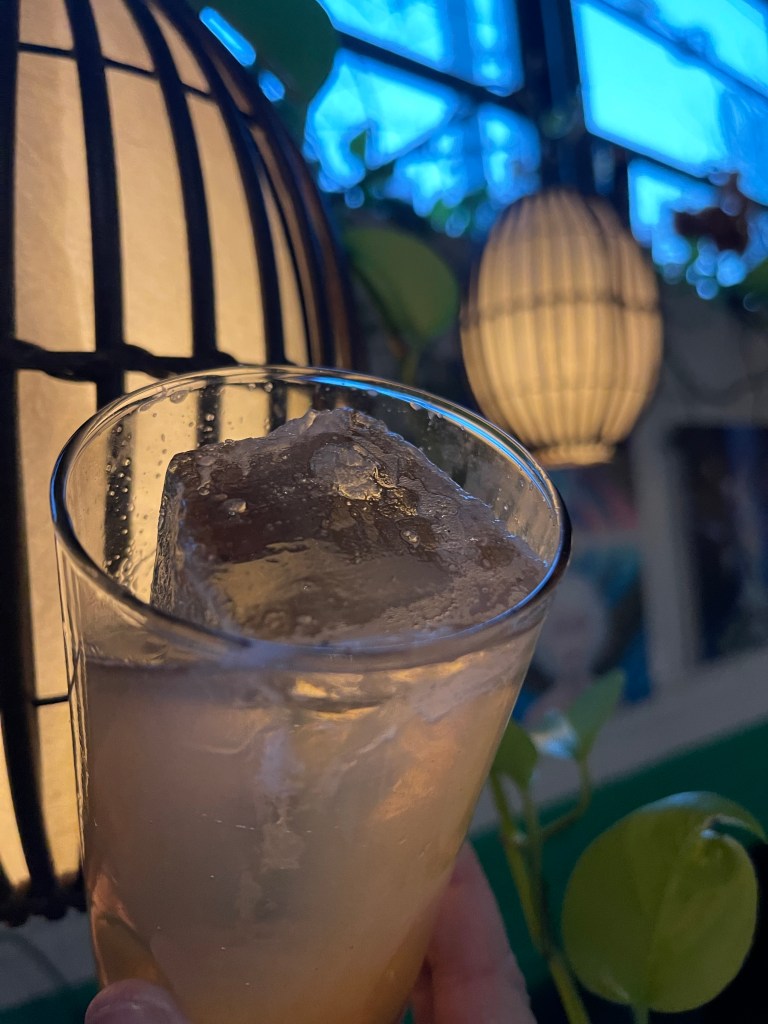
My amalgamation—a gentle French pale pink liquid with a slight fizz—arrived in a coupe with a frosty blush. Let’s analyze the presentation a bit. Greg had listened to my words—champagne, grapefruit, citrus, dry—mixed them into my dream drink and served them in a very French champagne glass—la coupe de champagne. I tasted it before I photoed it which was mistake. A one-of-a-kind marvelous drink. Genius Greg explained although it tasted like grapefruit and lemon and champagne, it had none of those ingredients.

R’s Negroni was classic. At this point we learned that Greg had a Negroni tattoo (Hint #3).
Greg, “How do you determine what kind of non-alcoholic drink a guest might like?”
“I always ask if they avoid alcoholic due to allergies or other restrictive conditions. If that’s not the case, I’ll ask if I might add a slight bit of bitters because of the complex flavor profile they can help create with negligible alcohol. Then I ask the same questions I’d ask for an alcoholic drink. Dry or sweet, etcetera,” he replied.
I asked Greg for my mocktail. Bitters are okay. He’d know what I liked.
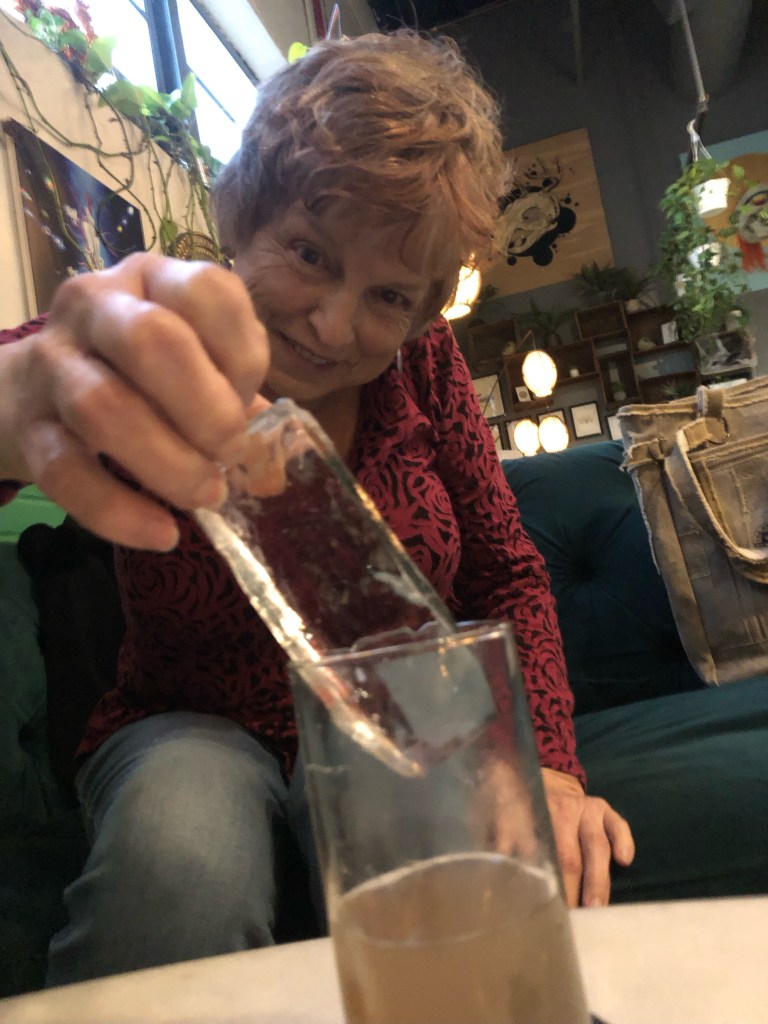
He did. It arrived in a highball glass with a rectangular cut-to-size ice cube. I quickly captured: Fever-Tree Mediterranean tonic, cardamon bitters, spiced apple juice, cranberry syrup. Fabulous and fun!
The ice cube had a story. Clinebell, a US company which opened in 1955, developed (1983) the ice machine that makes clear ice—huge 300-pound blocks useful for ice artists, chefs, and in 2020 they developed a smaller 25-pound clear ice machine—exciting for mixologists—delightful for drinkers.
“Do you have a favorite bartender?” I asked.
“There are so many talented ones. I think Ada Coleman never gets the credit she deserves. She was head bartender at London’s Savoy Hotel in the early 1900s. There are a lot of local great ones, too. I’m sure you’ll have fun discovering them,” he smiled.

“What’s special about this place, your place?” I asked.
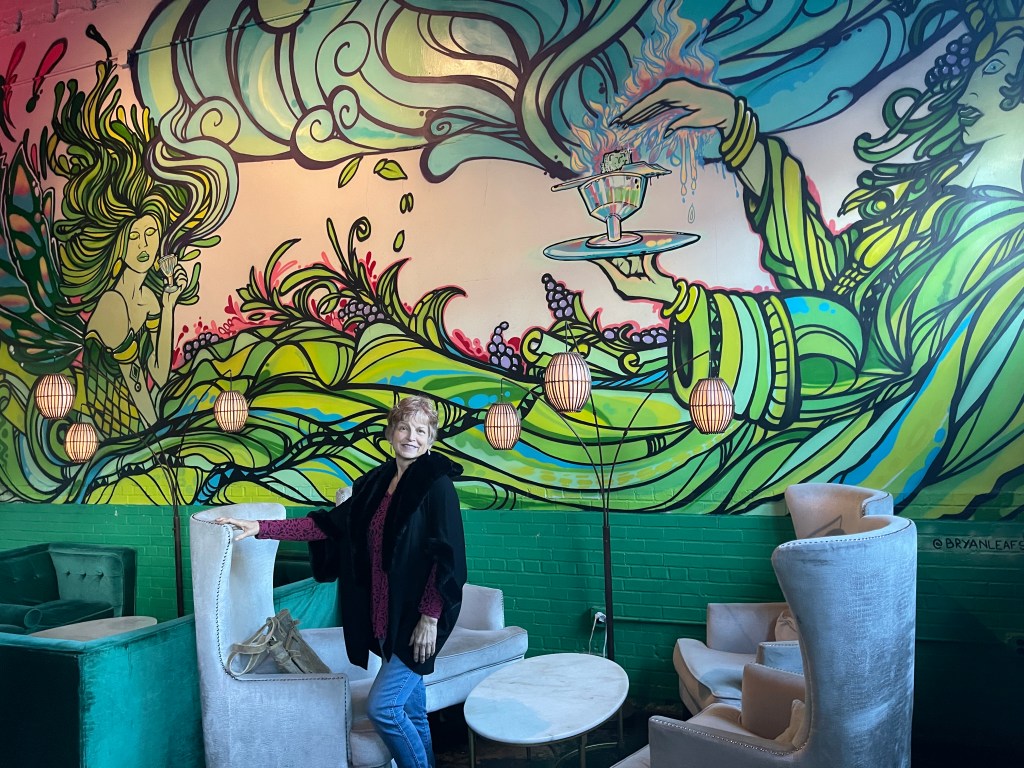
“Our beverages. Our staff. We are limited capacity. Seated only guests. (Hint #4) Which means You can have intimate, meaningful connections. If we’re at capacity, we suggest guests stop in through the back/side/main? (Hint #5) for some delicious food and check back in a few. We really love what we do and the guests we meet.” Greg said.

“What’s special about this place, your place?” I asked.
“Our beverages. Our staff. We are limited capacity. Seated only guests. (Hint #4) Which means you can have intimate, meaningful connections. If we’re at capacity, we suggest guests stop in through the [back/side/main?] entrance [(Hint #5)] for some delicious food and check back in a few. We really love what we do and the guests we meet,” Greg said.
We thanked Greg for sharing his passion and making our delicious drinks. Honestly, I wanted another drink but he was leaving.
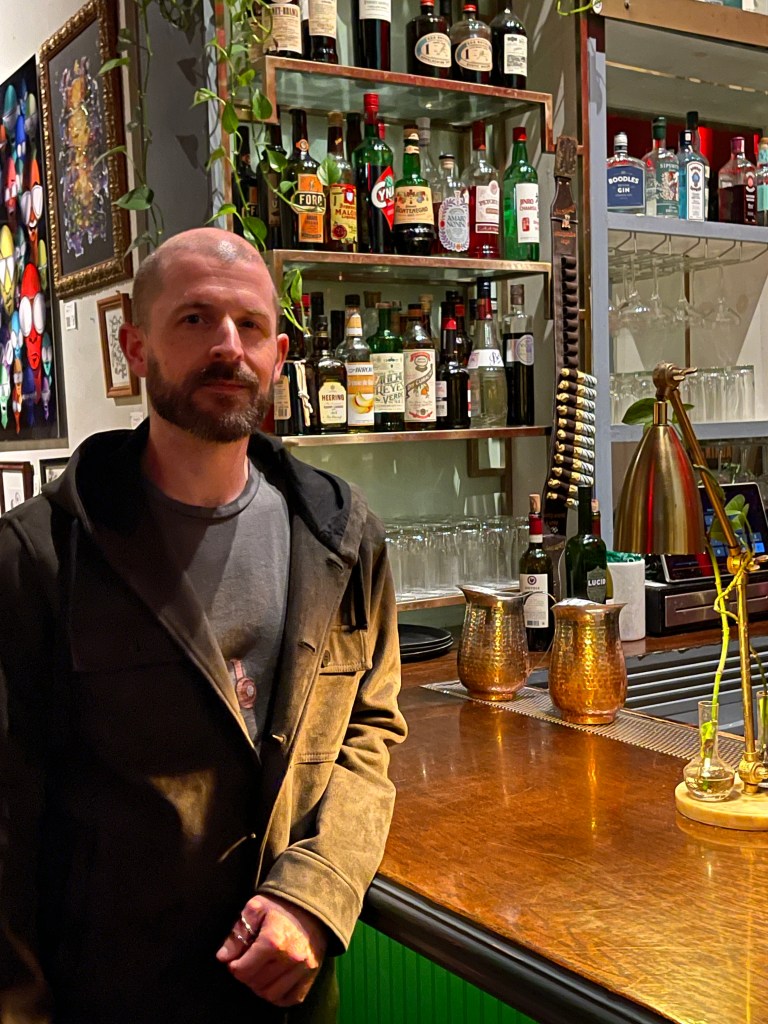
“Hey, any parting words of wisdom?” I asked.
“You’re way too late to be original but you’re right on time to be relevant,” he replied as he scooted through the back/side/main door.
Look for the name of this fabulous two-word-named-hidden gem (Hint #6) (and maybe R’s) in next month’s post.
Comment if you know it. AND share your favorite hidden gem in the Triangle and in the world.
 Chambers Life!